Our History

The Vision: A Trail Across the Plateau
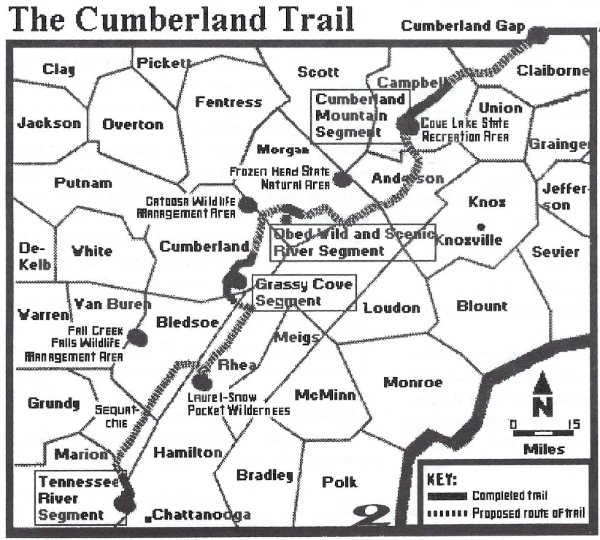
In the early 1970s, a bold idea began to take shape among a small group of conservation-minded Tennesseans: a continuous footpath stretching the length of the Cumberland Plateau’s eastern escarpment.
They imagined a trail that would connect cliffs and gorges, waterfalls and forests, rural communities and public lands — preserving the rugged beauty of East Tennessee while opening it to hikers for generations to come.
At the time, the idea seemed ambitious, even improbable. But the vision endured.
The Founders and Early Advocates
The earliest champions of what would become the Cumberland Trail were individuals who believed deeply in conservation, access, and legacy.
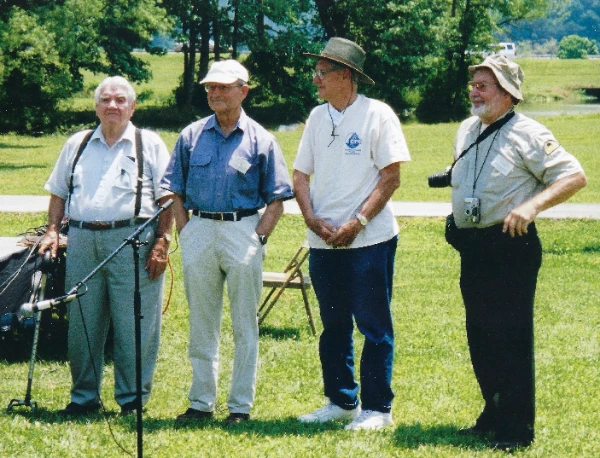
Among them were:
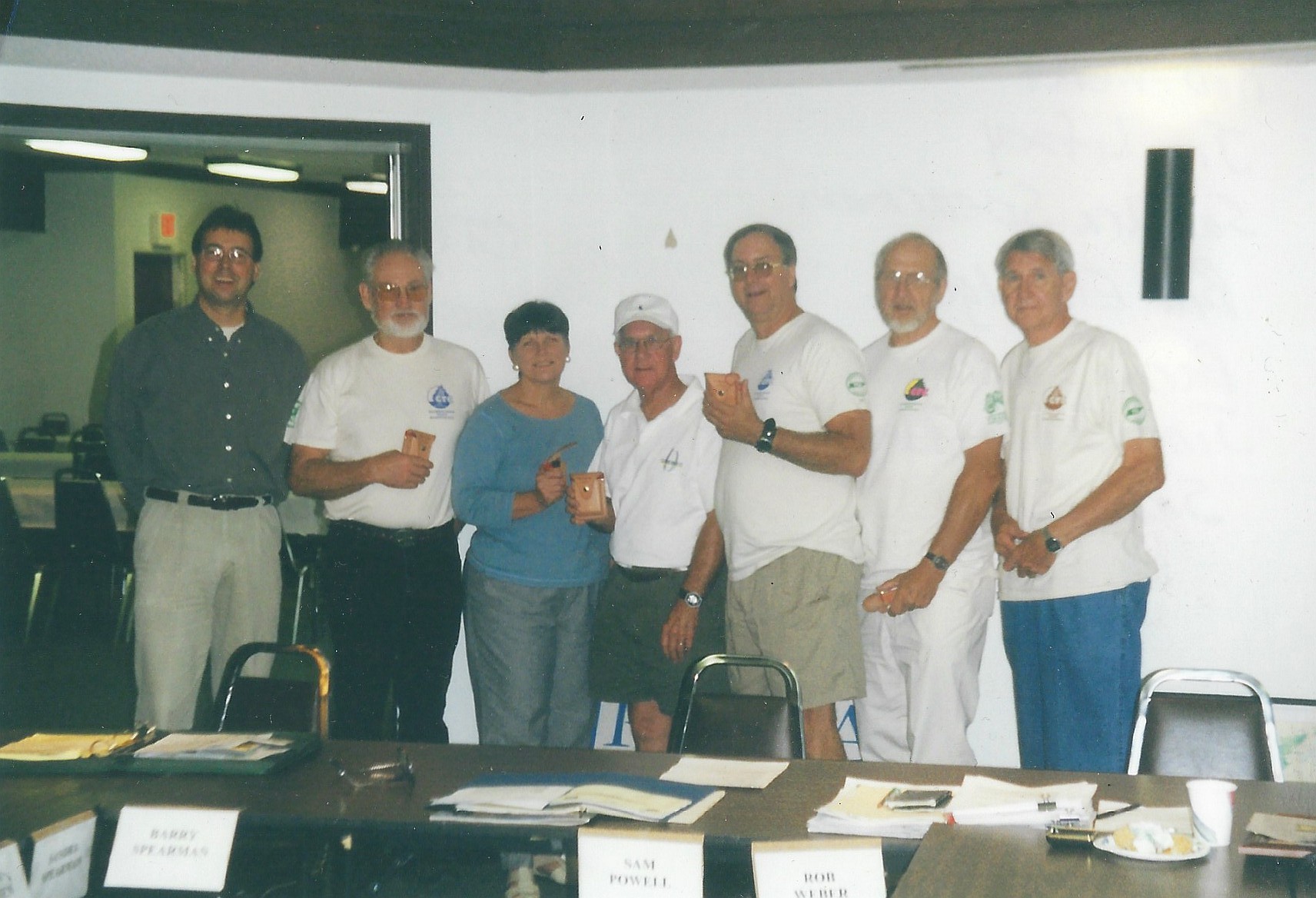
- Bob Brown
- Evan Means
- Sam Powell
- Donald Todd
- Mack Prichard
These visionaries saw not only a hiking trail, but a long-term conservation corridor — a project that would protect land, inspire stewardship, and strengthen communities along the Plateau.
Their early advocacy laid the philosophical and organizational groundwork for what would eventually become a state park and a nationally recognized long-distance trail effort.
They began with maps, conversations, and conviction — long before there were official designations or funding streams.
From Vision to Organization (1994)
By the early 1990s, it became clear that realizing this ambitious idea would require a dedicated organization.
In 1994, the Cumberland Trail Conference (CTC) was formally established to support the planning, construction, and long-term stewardship of the Cumberland Trail.
The Conference provided:
- A nonprofit structure to receive funding
- Coordination for volunteers
- A unified voice for advocacy
- A long-term commitment to completing the trail
The creation of CTC marked a turning point — transforming a powerful idea into an actionable, sustained movement.
State Park Designation & Public–Private Partnership
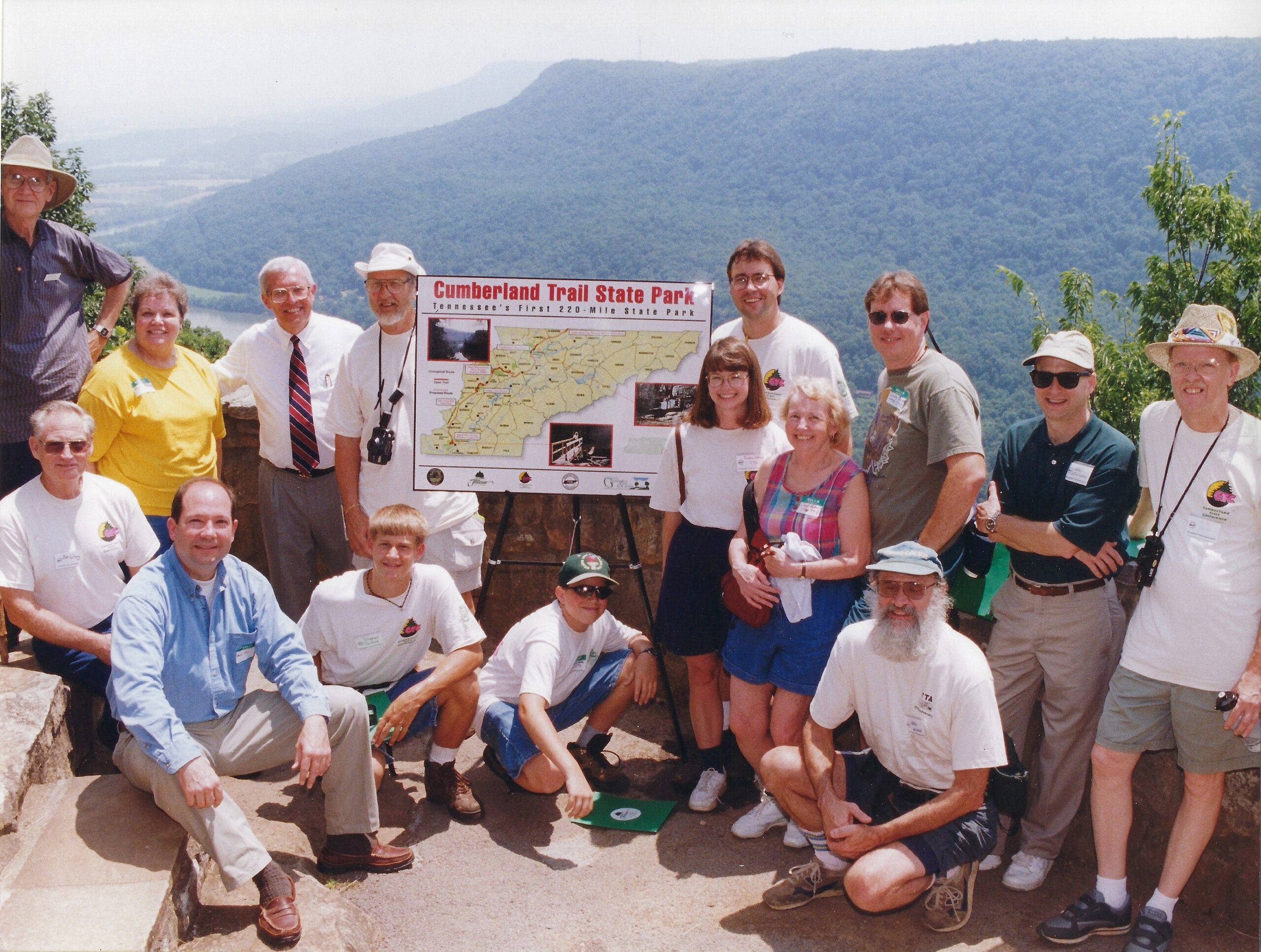
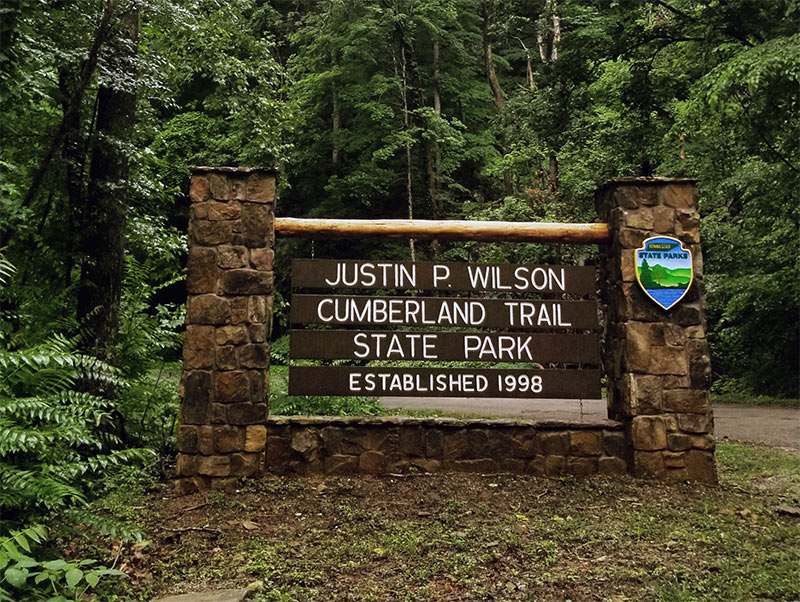
Momentum accelerated in 1998 when the Cumberland Trail was officially designated Tennessee’s 53rd state park.
Today, the trail is managed as Justin P. Wilson Cumberland Trail State Park by the Tennessee Department of Environment and Conservation (TDEC), with the Cumberland Trail Conservancy serving as its primary nonprofit partner.
This partnership created a unique and powerful model:
- The State provides oversight, staffing, and park infrastructure.
- The Conservancy mobilizes volunteers, raises funds, and supports trail construction and stewardship.
In 2002, the park was renamed in honor of Deputy Governor Justin P. Wilson, whose leadership helped secure critical early state and federal support for the trail’s development.
This designation cemented the Cumberland Trail as one of Tennessee’s most ambitious conservation and recreation initiatives.
Early Funding & Catalytic Support
Like many large conservation projects, the Cumberland Trail required early champions willing to invest in possibility.
Seed funding and philanthropic support — including leadership from foundations and private donors — helped initiate land acquisition, corridor planning, and early trail construction.
These early investments allowed the project to transition from vision to visible progress on the ground.
A Volunteer Legacy
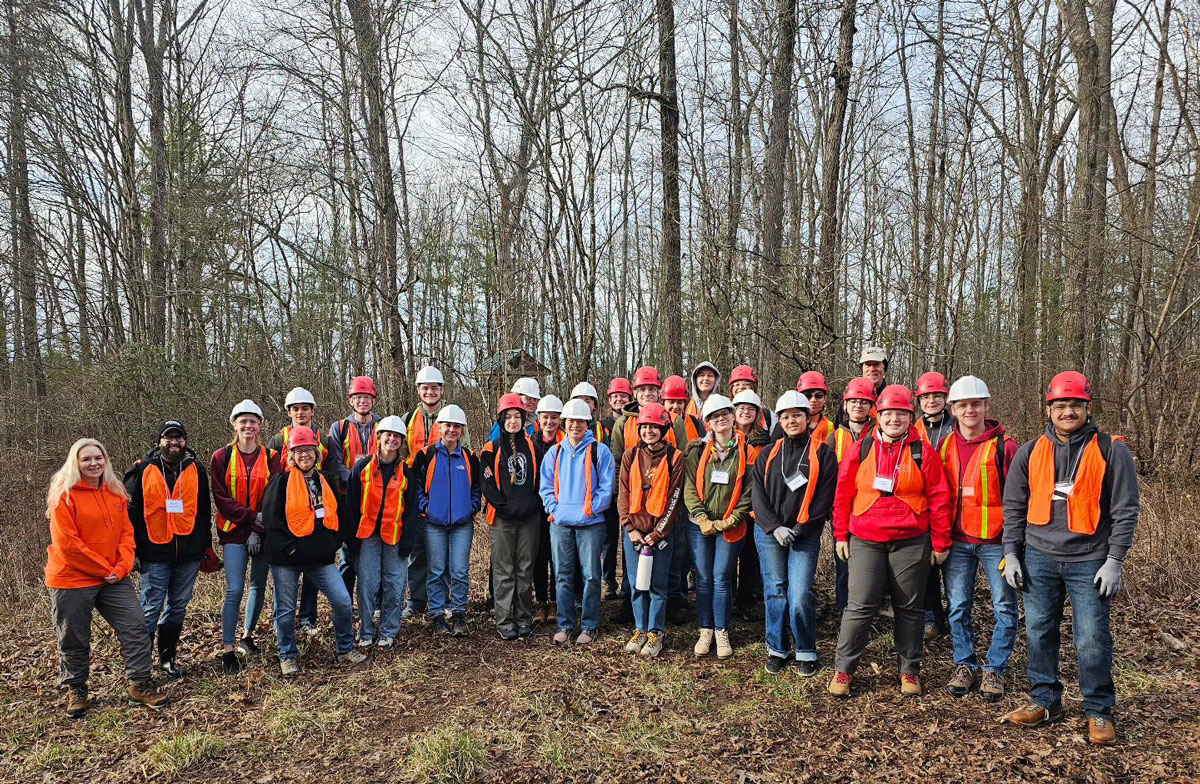
From its earliest days, the Cumberland Trail has been built largely by volunteers.
This grassroots spirit remains one of the defining characteristics of the project.
Community members, hiking clubs, students, retirees, and dedicated trail builders have contributed thousands of hours shaping the path mile by mile.
This culture of craftsmanship and stewardship reflects the Conservancy’s enduring values:
- Respect for the land
- Long-term thinking
- Collaboration across communities
- Pride in building something that lasts
Few long-distance trails can claim such a deeply embedded volunteer construction model.
Milestones Along the Way
Early 1970s – Vision for a continuous Cumberland Plateau trail emerges
1994 – Cumberland Trail Conference formally established
1998 – Trail designated Tennessee’s 53rd State Park
2002 – Park renamed in honor of Justin P. Wilson
2000s–Present – Corridor expansion, land protection, and steady mile-by-mile construction
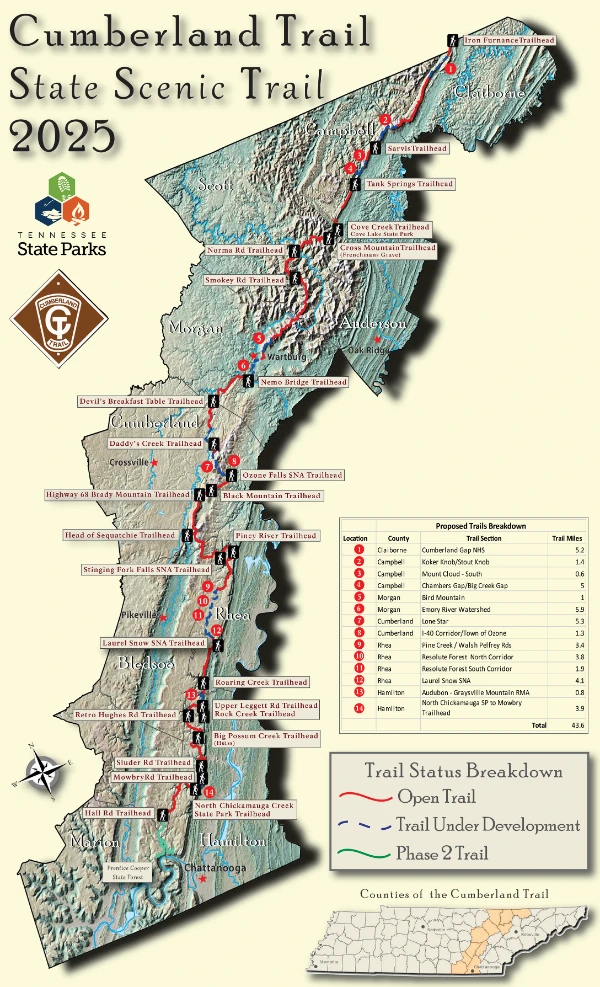
Today, the trail stretches across 11 counties in East Tennessee, linking landscapes of extraordinary ecological and cultural significance.
When completed, it will extend more than 300 miles from Cumberland Gap National Historical Park to Chickamauga-Chattanooga National Military Park.
The Trail Today — And Tomorrow
What began as a visionary idea in the 1970s has grown into one of Tennessee’s most ambitious conservation efforts.
The Cumberland Trail protects critical ecosystems, connects communities to outdoor recreation, and strengthens regional economies through sustainable tourism.
Work continues — mile by mile.
The long-term goal remains unchanged: a fully completed Cumberland Trail that stands as a testament to collaboration, craftsmanship, and enduring vision. The founders imagined a trail that would last for generations.
Today, that work continues — carried forward by volunteers, partners, supporters, and communities across the Plateau.
In 2026, we adopted the name Cumberland Trail Conservancy to reflect our enduring commitment to conserving the Corridor and completing the Trail for future generations.